
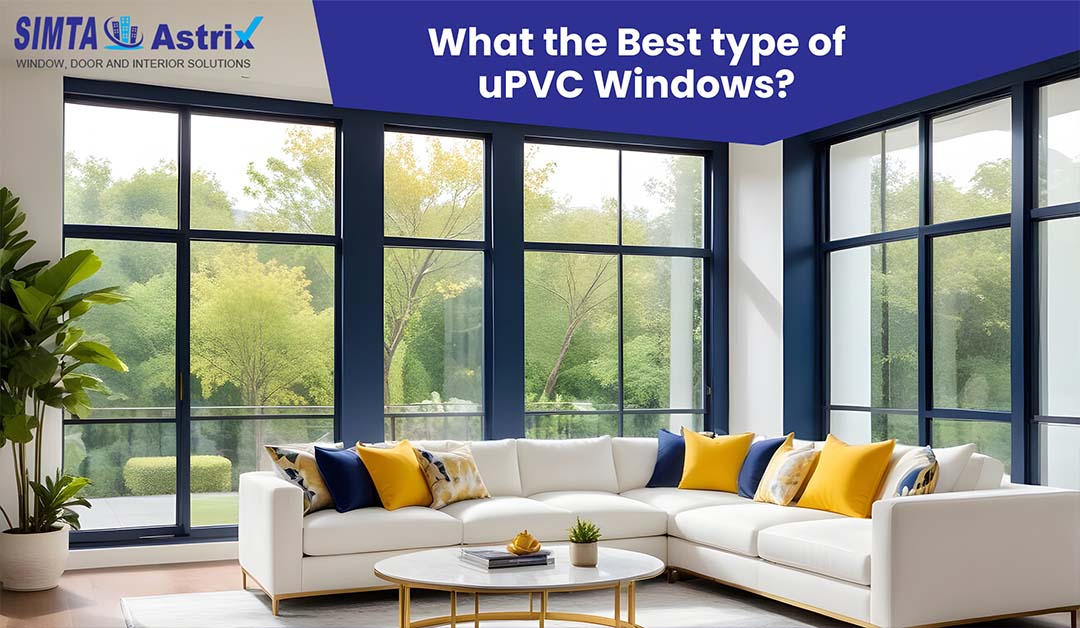
Most uPVC windows in India come in various styles and are known for their durable performance. Casement and tilt-&-turn are great for their tighter sealing and premium hardware. Glass choices like single, double, or laminated usually move the price the most. Installation quality, reinforcement, and finish (e.g., German laminates from Simta Astrix) is what will make the quality worth it.
uPVC Windows Types explained
Sliding Windows
Great for balconies and wide openings. Easy to operate, space-saving. Best value per square foot.
Casement Windows
Hinged, tight compression seal, excellent for noise and dust control. Ideal for bedrooms and living rooms on noisy streets.
Tilt & Turn Windows
Two operations in one sash—tilt for gentle ventilation, turn for full opening. Premium hardware and sealing.
French Windows
(double sash) Classic, symmetrical aesthetic with wide opening. Adds elegance to living areas.
Bay Windows
Multi-panel projection that adds depth, light, and a seating nook. A design highlight for living spaces.
Arch/Shape Windows
Custom curves or shapes to match heritage or modern architecture.
Fixed Windows
No opening, maximum light and views, lowest cost per square foot. Pair with operables for ventilation.
Ventilators
Compact windows for bathrooms, kitchens, and utility areas to ensure airflow.
Combination Windows
These types of uPVC windows come with the versatility of being able to mix up different windows styles – such as casement+sliding+fixed
Simta Astrix covers them all: sliding, casement, tilt-&-turn, French, bay, arch, fixed, ventilators, and combination sets—so you can mix forms without mixing suppliers.
Example usage for uPVC Windows
- On a noisy main road: Casement or tilt-&-turn with laminated or double glazing.
- Large balcony opening: Sliding or lift-&-slide for convenience and width.
- Feature window in the living room: Bay or French with laminate finish for design impact.
- Compact bath or kitchen: Ventilator + mesh for airflow and bug control.
- Panoramic view with budget in mind: Large fixed pane + one casement/smaller slider nearby.
What really drives the price for uPVC Windows
Price isn’t random. It follows a few predictable levers:
- Frame system & reinforcement: Multi-chamber profiles with steel reinforcement add strength and stability—worth it for long-term performance.
- Glazing: Single is budget; double and laminated improve noise and heat control, at a higher cost.
- Hardware & operation: Multi-point locks, lift-&-slide gear, quality hinges, restrictors. Better hardware = smoother use and tighter seals.
- Size & shape: Bay, arch, and French profiles need more fabrication time and fittings.
- Finish: Classic white costs less. German-imported laminates (Mahogany, Walnut, etc.) add a premium but bring long-life colour stability.
- Site complexity: Demolition, sill work, grills, sealants, or special access all add up.
- Installation quality: Square alignment, correct foam/backer rod, and perimeter sealing make or break performance.
Hidden costs to keep an eye on
- Grills & mesh: SS or fibre mesh for insects; ensure it doesn’t clash with sash movement.
- Sill & finishing: Marble/granite adjustments, external beading, paint touchups.
- Demolition & disposal: Old frame removal, debris handling.
- Access & height: Scaffolding or special site access may be needed in high-rise installs.
How to optimize your budget (without regret)
- Priorities performance rooms: Street-facing bedrooms and living rooms deserve laminated or double glazing.
- Use fixed judiciously: Pair a large fixed pane with one operable to save cost while keeping views.
- Pick finishes strategically: Go classic white widely; add wood-finish laminates to feature areas.
- Don’t skimp on install: A perfect fit and seal easily outperform costlier materials installed poorly.
- Choose one system brand: Uniform hardware and profiles reduce service issues and simplify maintenance.
Why Simta Astrix is the Best Choice for uPVC Windows
- Engineered for India: Multi-chamber uPVC profiles with steel reinforcement for dimensional stability—resist warping in heat and humidity.
- Acoustic focus: With the right glass and sealing, expect ~30–40 dB noise reduction in typical scenarios.
- Finishes that last: German-imported laminates (Mahogany, Walnut, and more) with 20-year colour warranty for stability and gloss retention.
- Complete options: Single/double/laminated/triple glazing, SS or fibre mesh, offset handles, lift-&-slide kits, robust hinges.
- Installation & service: Supervised fitting, precise measurements, and prompt after-sales support.
- Reliable capacity: 18,000 TPA production; 450+ dealers and fabricators across India; exclusive projects nationwide.
FAQs
Are uPVC windows really soundproof?
“Soundproof” is a stretch, but 30–40 dB reduction is realistic with laminated or double glazing and a tight, well-sealed installation.
Do uPVC frames warp or fade in Indian climates?
Quality uPVC with steel reinforcement maintains shape. UV-stable profiles and German laminates resist yellowing and colour loss.
Who will handle installation and after-sales?
Simta Astrix offers supervised installation and post-sale service through a nationwide network of 450+ partners for fast support.